


Bikes
Why Choose Us
01/
Rich Experience
As a result of our commitments and efforts, our excellent products and service as well as our idea have returned us with great reputation from users and clients at home and abroad.
02/
Customized services
Our company has established its after-sales parts warehouses to completely improve its after-sales repair response speed.
03/
Production Market
Up to now, The export business has covered more than 100 overseas countries and regions.
04/
Our Product
Trampoline, Piltaes, Exercise Bikes, Stepper Machines.
What is Bikes?
Stationary bicycle, is an indoor workout machine that resembles and works like a normal bicycle, except it’s fixed in place. Exercise bikes are one of the most widely used and popular indoor workout equipment in the world and are a staple of any good home fitness routine.

Add to Inquiry
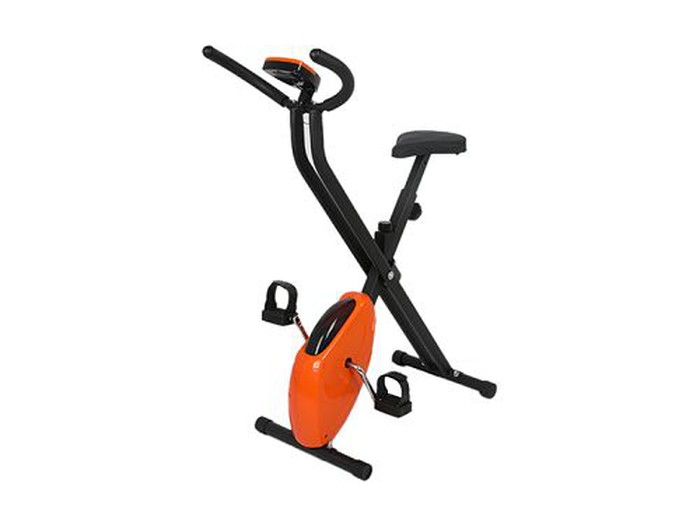
Belt Exericse Bike
» +/- resistance(infinitely variable control)
» Max Weight: 120 Kgs
» Computer Functions:Scan,Speed,Time,Distance,Cal.
» Assebled Size :67x40x111cm
» Max Weight: 120 Kgs
» Computer Functions:Scan,Speed,Time,Distance,Cal.
» Assebled Size :67x40x111cm

Add to Inquiry
Spine Exericse Bike
» 4 KGS Flywheel
» 6-LEVELS for adjustable height of Handle bar
» Max Weight: 120 Kgs
» Computer Functions:Scan,Speed,Time,Distance,Cal. Pulse
» 6-LEVELS for adjustable height of Handle bar
» Max Weight: 120 Kgs
» Computer Functions:Scan,Speed,Time,Distance,Cal. Pulse
Product Categories


Key Benefits Of Bikes
1. Weight Loss
If you’re looking to shed some pounds, an exercise bike is a very efficient way to burn calories. Riding a stationary bike for 30 minutes at a time can burn anywhere between 200-300 calories (depending on the users weight).
2. Toning
Cyclists are known for having amazing legs. It makes sense: when you’re pedaling away on a bike, your quads, glutes, and calves are hard at work propelling the bike. Bonus: if you’re working that handlebar, you’re giving your upper body a workout, too.
3. Muscle Strengthening
Stationary bikes work tirelessly to strengthen the major muscle groups that support the back, leg, thigh, and hamstring muscles. There are 2 different strokes that are used on an exercise bike: the push and the pull. Pushing down on the pedals is a great way to strengthen the quads, while pulling up is a great way to strengthen the hamstrings. Bonus: exercise bikes cause less stress on the knees than outdoor bikes since you’re riding on even terrain.
4. Ease On The Joints
Running, jogging, and many team sports and classes can be hard on your joints because of the amount of impact involved. An exercise bike is an exceptional way to get your heart rate up without putting excess stress on those precious joints. In fact, a bike puts even less stress on the back, hips, knees and ankles than walking. Proper form on the bike means your knee should bend just slightly on the down pedal stroke. If it’s too bent or too straight, you’ll need to adjust that saddle.
5. Convenience
The best part about an exercise bike is that you can use it whenever, wherever. If the weather outside is too hot, too cold, or too rainy, who cares? You can keep a recumbent bike in your home office, bedroom, or patio, giving you the chance to work out after dinner, before breakfast, or during a break at work. Plus, when you’re on your machine, you can catch up on your favorite TV shows, read the newspaper or a book, or keep an eye on your little ones.
6. Cardio
Cardio exercise works to lower high blood pressure, regulate blood sugar, and prevent heart attacks. Not to mention, it’s a great way to lose weight. Hopping on an exercise bike is an exceptional way to work your body because it will help your heart become more efficient at pumping blood. It also works hard to increase the good cholesterol and lower the bad cholesterol in your body. To put it simply, riding an exercise bike for 30 minutes a day for a handful of times per week can extend your life.
7. Heart And Health Benefits
Riding an exercise bike can strengthen your heart and lungs, while also improving your body’s ability to utilize oxygen. Using a stationary bike regularly can also help regulate high blood pressure and improve respiratory function. For best results, it’s recommended that you exercise five days a week for 30 minutes.
8. Energy-Boosting
According to a study published in the journal Psychotherapy and Psychosomatics, bike riding improved energy levels by 20 percent and decreased fatigue by 65 percent. Why, you ask? It’s simple: cycling triggers your brain to release the neurotransmitter dopamine, which is linked to energy.
9. Allows For Interval Training
Interval training is a proven effective method to torch more calories, increase efficiency, and improve overall aerobic performance. When using an exercise bike, you eliminate a lot of the hurdles on the road like uneven terrain that can limit peak intensities and stoplights that break the flow.
10. Safer Than Road Biking
With road biking come inherent dangers. From T-junctions and roundabouts to parked vehicles, potholes, impaired drivers, and so much more, defensive riding is critical. However, an exercise bike keeps you safe in the comfort of your home without all the added hazards.
Types of Bikes
01
Upright Bikes
As the name suggests, upright bikes encourage you to sit in an upright position and are designed for you to switch between a sitting and standing position, much like an outdoor road bike. The pedals are positioned directly under your body and you generally lean forward to reach the handlebars.
02
Recumbent Bikes
The recumbent bike segment is the fastest-growing, mainly due to its availability and reduced stress on the lower back, as well as its affordability. This type of stationary bike is distinctive for its wider seat and reclined position. The recline results in less stress on the joints because the pedals are farther forward. The bike is also lower to the ground, making getting on and off easier.
03
Indoor Bikes
For those who prefer to speed through workouts, indoor bikes are built for fast pedaling and burning calories. Typically referred to as spin bikes (a trademarked name), these powerful machines became popular with the phenomenon of spin classes.
How to Set Up an Bikes Properly
Seat Height
With your feet flat on the ground, stand next to your bike and adjust the seat so that it's about even with your hipbone. "Put your hands where you would consider your hips are—you'll feel a rounded-off bone that goes all the way from front to back," Karp says. That's your iliac crest. "The seat should be more or less even with that. But most people need to make a few more adjustments from here."
Seat Distance
Once you've gotten to a comfortable height, next is to move the seat forward or backward, toward or away from the handlebars. Sitting on the bike, clip in or put your feet in the cages and bring your legs to 9 o'clock and 3 o'clock. (It doesn't matter which leg is in front.)
Handlebar Height
"When it comes to the handlebars, the simple answer is whatever feels comfortable," says Karp. "You don't want to feel like you're either overreaching or too bunched up." Your elbows should be slightly bent and your shoulders away from your ears as much as possible.
Body Positioning
As general rule of thumb, as long as your spine is relatively straight, your core is engaged when you're riding, and you have a slight bend in your elbows without too much weight in your shoulders, you're in a good position. "You also want your knees to be tracking over the middle of your feet," he adds.
What Muscles Does a Stationary Bikes Work Out?
Lower Body
As you pedal for the first few minutes, you will begin to feel the strain on your legs. But which muscles are feeling the benefit of the workout?
Quads and Hamstrings
These are your front and back thigh muscles and they continually work as you pedal. Your quads can be found in your femur bone and act as knee extensors. A stationary bike targets this muscle group by having the quads steadily working as you pedal.
Glutes
The gluteal muscles, also known as your butt, are worked whenever you push down when pedaling. These muscles help in propelling you forward by working with the hip to pivot your thighs as you cycle. Cycling tones and strengthens your small, medium, and large buttocks.
Calves
Your triceps sural, or calf muscles, are the muscles located at the back of your leg which do the pushing and pulling as you cycle. Cycling targets your primary calf muscle, called the gastrocnemius, as it is used to lift your heel and extend your foot during pedaling.
Hip Flexors
This is the muscle group that surrounds and supports the ball-and-socket joint in your legs. This muscle group allows you move your leg and knee up to your torso, but it’s also used to bend your upper body forwards, towards your hip. This area is worked as your body cycles, runs, or walks. Cycling allows you to work out your flexors in tandem with your hips and glutes, and has the effect of both toning and stretching them.
Upper Body
Most people are pretty familiar with how an exercise bike targets the muscles of your lower body, but it may come as a surprise to learn that cycling can also target your upper body’s muscles as well.
Abdominal Muscles
Aside from your legs, what other muscles does the bike machine work out? If you’ve ever had a vigorous cycling session, you’re probably aware that that cycling can and will target your ab muscles, giving them a tremendous workout.
Back
Cycling also targets your back muscles and tones and strengthens them. As your abs and back muscles improve, your spine gets increased stability, resulting in a more comfortable and steadier ride.
Biceps and Triceps
Your biceps and triceps can be found in the front and back of your arms and these muscles are worked heavily since they’re crucial for helping you grip the handlebars as you cycle.
Buying Guide of Bikes
Indoor Cycling Bikes: Features and Characteristics
Flywheel - To give the rider a similar feeling to riding outdoors spin bike manufacturers leave the rotating flywheel open, unlike on other types of bike, in order to simulate the rolling motion. As the pedals turn, the perimeter weighted flywheel creates momentum which again gives the user a realistic riding experience.
Body Position - The first thing that you will notice when comparing the three kinds of exercise bike is that the body position on each is very different. When riding an indoor cycle, the seat and handlebars are close to level with each other meaning the rider's body has a lower, more aerodynamic profile that mirrors the riding position of a road or mountain bike.
Pedals - Adding to the realistic feel is the presence of dual sided or SPD pedals. Dual sided pedals come as standard on most indoor cycles, meaning you can either securely fasten your feet to the bike using the tight toe straps, or with the SPD clips on cycling shoes. The SPD system allows the user to physically attach their feet to the bike allowing them to transfer more power to the pedal and activate their hamstrings more during a pedal stroke.
Resistance - Resistance is applied on spin bikes by either friction or magnets. Magnetic resistance is increased by moving the magnets closer to the wheel and creating drag. Friction resistance is the more common of the two, and simply works by turning a knob which presses down on the flywheel like the brakes of a real bike.
Upright Exercise Bikes: Features and Characteristics
Body Position - On an upright bike the shape still looks quite like a normal bicycle, however the handlebars tend to be higher up than the seat meaning the rider's body position isn't quite so low profile. This can often be comfier for people who aren't used to riding crouched over for long periods of time. Seats also tend to be slightly larger and comfier than on spin bikes, which are purely built for performance.
Braking - The crucial difference between the experience on an upright or recumbent bike and an indoor cycle is that you can stop pedaling immediately rather than having to be in a constant rotation that is consistent with the flywheel speed. It does mean that when you pedal hard on an upright or recumbent it can feel like the flywheel is moving faster than the pedals.
Technology - Upright exercise bikes often require power from a mains outlet which isn't always ideal in garages or sheds, where many people have their home gyms. What it does mean, is that upright and recumbent bikes have much more advanced displays and user interfaces. Where an indoor cycle just has a resistance knob, upright and recumbent bikes have displays which to control your workout. The displays generally show; time, distance, cadence, calories, heart rate and some even have preset workouts built-in.
Resistance - On upright and recumbent bikes, resistance is changed electronically using buttons on the console, normally these are simply 'up' and 'down' options to cycle through the available resistance levels. The resistance that makes pedaling harder is usually created by using magnetic pull.
Recumbent Exercise Bikes: Features and Characteristics
Body Position - Last but not least is the recumbent bike. Probably the most distinctively shaped of the three types of exercise bike. You will notice a recumbent bike has a seat with an upright back to it, similar to a chair. The pedals are out in front of the user rather than directly underneath. This body position makes recumbent models ideal for people who are less mobile or who have lower back problems.
Our Factory
1. With the world class advanced technology and modern laser cut equipment imported from Germany to insure the accuracy .It is guaranteed that all the tube be formed R arc without acute angle .
2. The automatic welding robot imported from Japan is adopted to the welding work to guarantee the high accuracy and artistic of the welding spot, the security and stability is secured.
3. Excellent surface treatment craft is realized by applying the advanced Static electricity spraying technology through double baked and double painted to guarantee the finish and durability.

FAQ
As one of the leading bikes manufacturers and suppliers in China, we warmly welcome you to buy or wholesale cheap bikes for sale here from our factory. All customized products are with high quality and competitive price.
Hexagonal Fitness Trampoline with Handle, trampoline in small backyard, small outdoor trampoline