


Garden Trampoline
Why Choose Us
Rich Experience
As a result of our commitments and efforts, our excellent products and service as well as our idea have returned us with great reputation from users and clients at home and abroad.
Customized services
Our company has established its after-sales parts warehouses to completely improve its after-sales repair response speed.
Production Market
Up to now, The export business has covered more than 100 overseas countries and regions.
Our Product
Trampoline, Piltaes, Exercise Bikes, Stepper Machines.
What is Garden Trampoline?
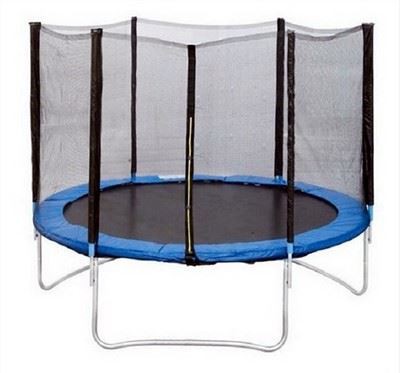
A garden trampoline is a recreational device designed for outdoor use in residential gardens or backyards. It consists of a frame made of metal, usually steel, which supports a piece of taut fabric or net called a bed. The bed is stretched over the frame and attached to springs that provide bounce when an individual jumps on the surface.


Product Categories


1. Impact on the Garden.
A trampoline is a very dominant feature; one that will be around for a long time even after the children have stopped using it. As much as you want to please the kids, can you face the prospect of looking at it?
2. What Size of Trampoline ?
Children grow fast, so the bigger the better. The most popular size is the 12ft trampoline. That’s the diameter of the frame. The actual pad you bounce on is 2ft (60cm) smaller, allowing for the springs or elastic ropes. Smaller sizes really only accommodate young children.
3. What Shape?
The round trampolines are the most popular; although rectangular trampolines are the ones used by professionals and adults. However safety nets do not fit on rectangular trampolines, and you will need those at the outset, even if you do not keep them in place later. In some places oval trampolines are also available which do take safety nets and give more bounce.
4. Do you Need a Safety Net?
For younger children, definitely. You want them to be able to enjoy the trampoline without you alongside every minute. Therefore a safety net and rules for use at the outset are essential. Otherwise you will have the whole neighbourhood on it at once and damage to kids and trampoline are likely.
5. Lawn Maintenance
With the best will in the world you will not move the trampoline round regularly if you site it on the lawn. The grass underneath dies anyway so you might as well devote a permanent position. You do not need level ground because you can sink the legs into the ground to achieve a level pad. This does have the advantage of anchoring the trampoline and preventing it from being flipped over by the wind.
6. Installation
If you are investing in a good quality trampoline, and looking at it as a long term feature, is it worth getting it installed professionally and having it sunk into the ground, level with the surrounding grass? A green pad sunk into the ground just becomes part of the garden space and the kids won’t have that drop off the edges anyway.
7. New or Second Hand?
Before you get tempted it is rarely worth going for a second hand bargain. There are lots of unused trampolines lying around, but if they need replacement pads, springs or ropes they are not usually a good buy. Often spare parts cost as much as buying a new one. A good quality trampoline should last for more than ten years – so that gives you a guide.
8. Value for Money
Do a bit of research and buy a brand from a reputable source. Cheap, bargain imports from companies that do not regularly deal with children’s play equipment are a bad buy. Safety is paramount as is back up service and a helpline.
9. Summer Toy or Serious Exercise?
Garden trampolines are designed to be used outside all year round. You do not need to think about putting them away for winter and if you think about it that rather defeats the object. A garden trampoline should be a piece of exercise equipment, rather than something to play around on with the hosepipe on occasional hot days.
10. Try Before You Buy
Finally I would recommend that you go somewhere that you can try a trampoline before you buy it. A specialist children’s play equipment centre will have trampolines that you can try out.
Safety Tips And Precautions When Using A Garden Trampoline
Supervision Is Key
One of the most important safety tips when using a trampoline is to always supervise children when they are jumping. Children under the age of six years old should not use a trampoline without adult supervision, and older children should have adult supervision at all times. Additionally, it is important to make sure that the children jumping on the trampoline are following the rules and guidelines for safe use.
Proper Size and Weight Limits
Trampolines come in different sizes and have weight limits, so it is important to choose a trampoline that is the right size for your children and can safely accommodate their weight. The trampoline should be big enough to provide ample jumping space, but not too big that it becomes difficult for the children to safely control their movements.
Installation and Maintenance
Proper installation of the trampoline is crucial for ensuring its stability and safety. Make sure to read the instructions carefully and follow them step-by-step. lt is also important to regularly check the trampoline for signs of wear and tear, and make any necessary repairs to ensure its continued safety.
Avoid Dangerous Stunts
Jumping on a trampoline should be limited to simple bouncing and jumping. Dangerous stunts such as flips, somersaults, and diving should be avoided to prevent accidents and injuries. Children should be taught to jump in the center of the trampoline, and to avoid jumping near the edges or on top of each other.
Use a Safety Net
A safety net can help to prevent children from falling off the trampoline and can also serve as a barrier to prevent accidental collisions with hard surfaces. Make sure to choose a safety net that is properly sized for your trampoline and is securely attached.
Wear Proper Safety Gear
Wearing proper safety gear, such as helmets and pads, can help to reduce the risk of injury. Children should a always wear safety gear when jumping on the trampoline, and it is also a good idea to have a first-aid kit on hand in case of any accidents.
Trampoline Placement
The placement of the trampoline is also important for ensuring its safety. The trampoline should be placed on n level ground, away from any obstacles or hard surfaces.The surrounding area should also be clear of any toys, furniture, or other items that could pose a hazard.

The age group of users: It matters whether you’re buying a trampoline for children, teenagers, or adults. The age of the users mostly impacts the choice of the appropriate maximum allowed weight of the trampoline, as taking this into account is vital for safe jumping and the long service life of your trampoline.
Skill level of the jumpers: The springs of home trampolines are distributed differently, and thus their bounce properties also differ from those of trampolines intended for professional purposes. That’s why we recommend you choose a trampoline from a family category.
Trampoline quality: Even if you’re buying a trampoline for a small garden, be sure to look for quality. A high-quality trampoline has first-rate, sturdy springs and an excellent jumping mat. All elements of the trampoline must be made of certified materials of the highest quality.
Your financial capabilities: The prices of trampolines differ greatly, due to many different factors. Since you’re looking for a trampoline for a small garden, you’ll be glad to hear that the price usually increases in line with the size of the trampoline. This means that trampolines for small gardens are less expensive than larger models.
Garden trampolines – the most important features
When choosing a trampoline for your garden, there are a few things you should pay attention to in order to buy a durable and safe product. Do you want to be able to use the trampoline for many years to come? Here’s what you should check before you choosing the one for you:
Maximum load – This value determines the total weight that the equipment can withstand during use. If exceeded, damage may occur to the mat or the springs. This could result in user injuries.
Frame – A solid frame is a key parameter to keep in mind. It should be made of durable materials that can withstand heavy loads. In addition, if the trampoline is to be used outdoors, check that the material is resistant to corrosion.
Jumping mat/net – The elasticity and durability of the material used is very important. If of poor quality it could rip after a few jumps. If you purchase a replacement mat, make sure it has the correct diameter.
Springs – These are responsible for higher jumps. Check that they are firmly attached to the frame and mat.
Spring covers – These protects both the user and the springs themselves. When jumping, it prevents the user from accidentally catching their foot on the springs. They also protect the springs against external factors.
Net – Some children’s trampolines have a special net to stop users from falling out during jumping.
The Top Garden Trampoline Materials For Durability And Safety
Galvanized Steel: Galvanized steel is one of the most durable and safe materials for trampolines. It is rust-resistant, long-lasting, and able to withstand harsh weather conditions.
UV-Resistant Polypropylene: Polypropylene is a synthetic material that is lightweight, strong, and resistant to UV rays. It is often used for the trampoline mat and provides a safe and durable surface for jumping.
Closed-Cell Foam: Closed-cell foam is a type of foam that is often used for trampoline padding. It is durable, resistant to water and mildew, and able to withstand high impact.
Polyester Mesh: Polyester mesh is a strong and durable material that is often used for trampoline enclosures. It provides a safe and secure barrier around the trampoline to prevent falls and injuries.
Carbon Fiber: Carbon fiber is a lightweight and strong material that is often used for trampoline frames and poles. It is able to withstand high impact and provides a safe and durable structure for jumping.
Our Factory
1. With the world class advanced technology and modern laser cut equipment imported from Germany to insure the accuracy .It is guaranteed that all the tube be formed R arc without acute angle .
2. The automatic welding robot imported from Japan is adopted to the welding work to guarantee the high accuracy and artistic of the welding spot, the security and stability is secured.
3. Excellent surface treatment craft is realized by applying the advanced Static electricity spraying technology through double baked and double painted to guarantee the finish and durability.

FAQ
As one of the leading garden trampoline manufacturers and suppliers in China, we warmly welcome you to buy or wholesale cheap garden trampoline for sale here from our factory. All customized products are with high quality and competitive price.
15FT Round Trampoline with Safety Net, 12FT Trampoline with Enclosure, mini exercise trampoline